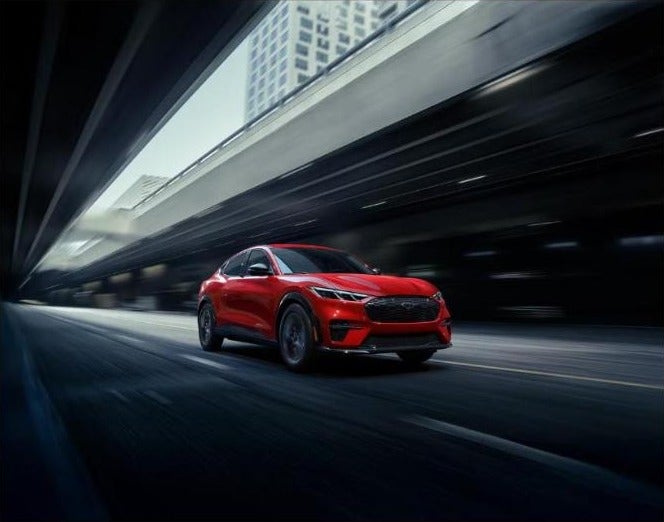

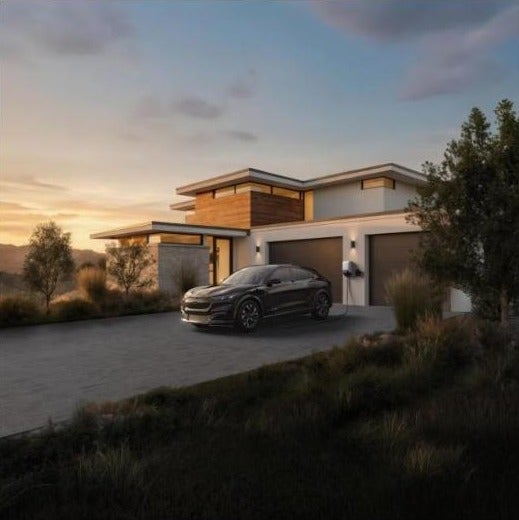
Say you plug in at 9 p.m. after dinner and wonder whether the car will be ready for the morning commute. That's the question most Mach-E shoppers are really asking. On a Level 2 home charger, a standard-range 2026 Mustang Mach-E takes just under 8 hours to charge, and a GT or Rally takes just under 10. A public DC fast charging stop takes under an hour, and a standard household outlet suits overnight top-ups. The Short Answer by Battery Battery and Drivetrain Battery Size Full Charge on 240V, 48 Amps Standard-range, rear-wheel drive 73 kWh usable 7.8 hours Standard-range, eAWD 73 kWh usable 7.7 hours Extended-range GT and Rally 91 kWh 9.9 hours An Overnight Charge at Home Plug in at 9 p.m. and a standard-range Mach-E is full before 5 a.m., while a GT or Rally finishes by about 7 a.m. Think of your driveway as a gas station that opens every night, where the habit matters more than the number. If you're shopping for one, our electric Ford inventory is a good place to start. A Top-Up Between Errands A standard 120V outlet adds charge slowly and steadily, and it fits drivers with a short daily commute who leave the car parked overnight. It's a trickle that keeps pace with a short commute. A Stop at a Public Fast Charger DC fast charging gives the quickest boost and lives at public stations. A typical stop takes under an hour, and Connected Navigation can precondition the battery on the way so you arrive ready to charge. The Ford app shows your progress. What Changes the Clock The table uses a 48-amp charger, and a plug-in cord on a 240V outlet charges more slowly. Your own numbers will vary a little from the table, because the size of the battery, your starting charge, the outside temperature and the battery's charging curve all shift the time. Starting from a half-full battery shortens a charge, and a cold January night in Barberton or Norton can lengthen it. Our Ford model research page has more on each model. Charging Time Questions How long does a Mach-E take on a 240V home charger? On a 240V outlet with a 48-amp charger, a standard-range Mach-E takes about 7.7 to 7.8 hours, while the GT and Rally need a little longer. That's a full charge from empty, so plugging in at night means the car is ready by morning. How long is a typical DC fast charging stop? A DC fast charging stop takes under an hour. Fast chargers live at public stations, and you'll check your charge and plan the stop in the Ford app. Connected Navigation can precondition the battery on the way. Does a bigger battery take longer to charge? Usually, since a larger battery has more to fill. The GT and Rally batteries take 9.9 hours on the same home charger where a standard-range battery takes just under 8, so the overnight window matters a little more and an earlier plug-in helps. Why did my charge take longer than expected? Several things move the clock, including the temperature outside, how much charge you started with and how the battery's charging curve tapers near full. A cold night can add time, and preconditioning through the Ford app before you drive helps you get the most from the battery. Ready to See One? We'll walk you through the charge port, the cord and the app. Schedule a test drive, then use Get Directions to plan your trip. Bring your questions and we'll walk through them.
Ford Hybrid vs. Gas: Which Is Right for You?
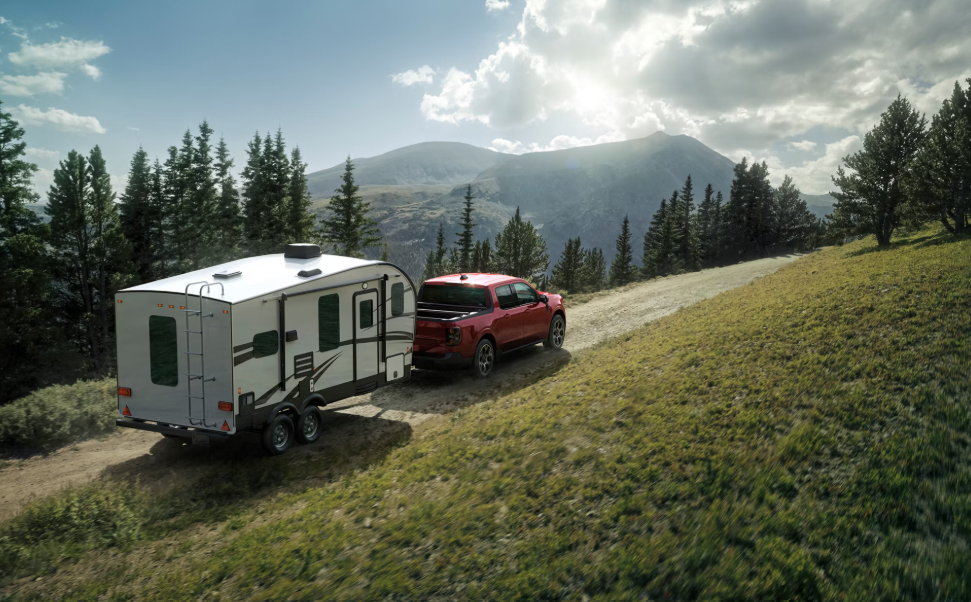
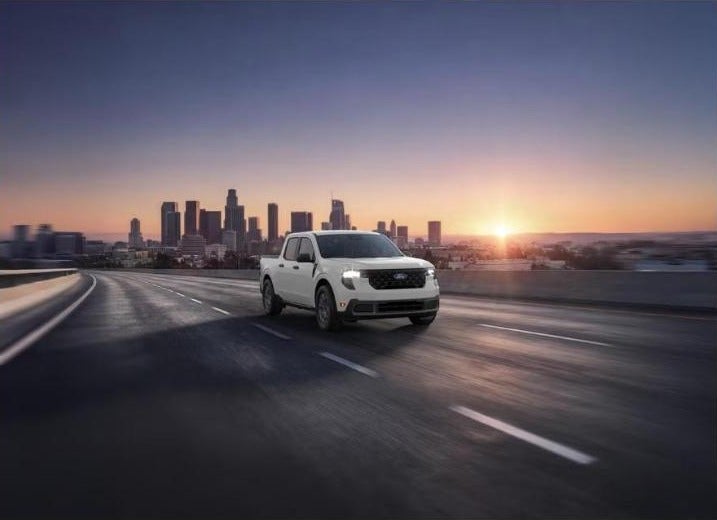
Imagine two Ford Mavericks parked side by side. They share the same bed, the same seats for five and the same footprint, and one carries the 2.5L Hybrid while the other carries the 2.0L EcoBoost. That pair is the hybrid-versus-gas question in its simplest form. Choose the hybrid if most of your miles are commuting and errands, because the 2026 Maverick Hybrid is EPA-estimated at 38 mpg combined with front-wheel drive. Choose gas when you want more power, since the EcoBoost engine makes 250 hp and 280 lb-ft. Both tow 2,000 pounds, or 4,000 with the 4K Tow Package. Same Truck, Two Engines 2026 Maverick 2.5L Hybrid 2.0L EcoBoost Power 184 hp combined 250 hp, 280 lb-ft EPA-estimated mpg, front-wheel drive (city/highway/combined) 42/35/38 23/32/26 EPA-estimated mpg, all-wheel drive (city/highway/combined) 40/34/37 22/30/25 Towing 2,000 lbs, 4,000 with 4K Tow Package 2,000 lbs, 4,000 with 4K Tow Package Fuel tank 13.8 gallons 16.5 gallons Every figure here is EPA-estimated, and your own mileage depends on how you drive. Where the Hybrid Earns Its Keep Look at the city row in the table. The hybrid's 42 mpg city is well above the EcoBoost's 23, and stop-and-go driving is where the electric motor does the most work, so if your week is school drop-offs, errands in Barberton and a commute toward Akron, the hybrid fits. All-wheel drive is available on the hybrid too, so you can have both efficiency and winter confidence. Where the Gas Engine Fits The EcoBoost brings the stronger punch, with 250 hp and 280 lb-ft. It's standard on the Lobo and Tremor and available on the XL, XLT and Lariat. It also carries a bigger 16.5-gallon tank, which suits long highway stretches. Towing and Hauling On the Maverick, the engine choice leaves towing unchanged, at 2,000 pounds standard and 4,000 with the 4K Tow Package. If you need to pull more, the 2026 F-150 offers a PowerBoost full hybrid that is rated for heavier trailers when properly configured. Pro Power Onboard on PowerBoost models can run your tools and gear. Match the Engine to Your Week Here's the plain version we'd give you at the dealership. Mostly in town: the hybrid. Mostly highway or you want the most power: the EcoBoost. Trailers and job sites: look at the F-150 PowerBoost. If your week is a mix, drive both back to back, and browse our vehicle comparisons for more side-by-side ideas. The difference shows up in the first mile, and our Ford model research page fills in the rest. Hybrid vs. Gas Questions Is a hybrid or gas Maverick better for city driving? The hybrid is the better match, with an EPA-estimated 42 mpg city with front-wheel drive compared with 23 for the EcoBoost. Electric assist works hardest in stop-and-go traffic, which is why the city number shines, though actual mileage may vary with your driving habits. Does the hybrid Maverick come with all-wheel drive? Yes, the 2.5L Hybrid is available with all-wheel drive and is EPA-estimated at 37 mpg combined. That keeps most of the efficiency while giving you extra confidence on snowy Northeast Ohio roads, though actual mileage may vary with your driving habits and the weather. Can a hybrid tow as much as the gas version? On the Maverick it can, since the hybrid and the EcoBoost both tow 2,000 pounds standard and 4,000 pounds with the 4K Tow Package. For bigger loads, the F-150 PowerBoost full hybrid is rated for heavier trailers when properly configured. What does EPA-estimated mean on a hybrid rating? It means the figure comes from standardized EPA testing, which lets you compare vehicles on equal footing. Your own results depend on how you drive, the weather and the load you carry, so you'll find actual mileage may vary from the number on the sticker. Can I drive the hybrid and the gas version back to back? Yes, and we encourage it. Schedule a test drive and tell us you'd like to compare the Maverick Hybrid with the EcoBoost, because a few miles in each shows you the difference in power and feel better than any chart can. Drive Both Bring your daily route in mind and we'll help you pick. Browse new Ford inventory, estimate payments with the payment calculator, or schedule a test drive. We'll go at your pace.