Blog / Ken Ganley Ford

Ford Mustang Mach-E Charging Guide

Ford Mustang Mach-E Charging Guide

Think about where your car sits at 10 p.m. That spot shapes your whole charging plan, and it's the first thing every Mustang Mach-E shopper wants to settle: where am I going to plug this in?

You can charge a 2026 Mustang Mach-E at home from a standard 120V outlet or from a 240V Level 2 setup, and on the road at public DC fast chargers. A 240V setup at home is the one we suggest, and a full charge on a 48-amp charger takes about 7.7 to 9.9 hours depending on the battery and drivetrain.
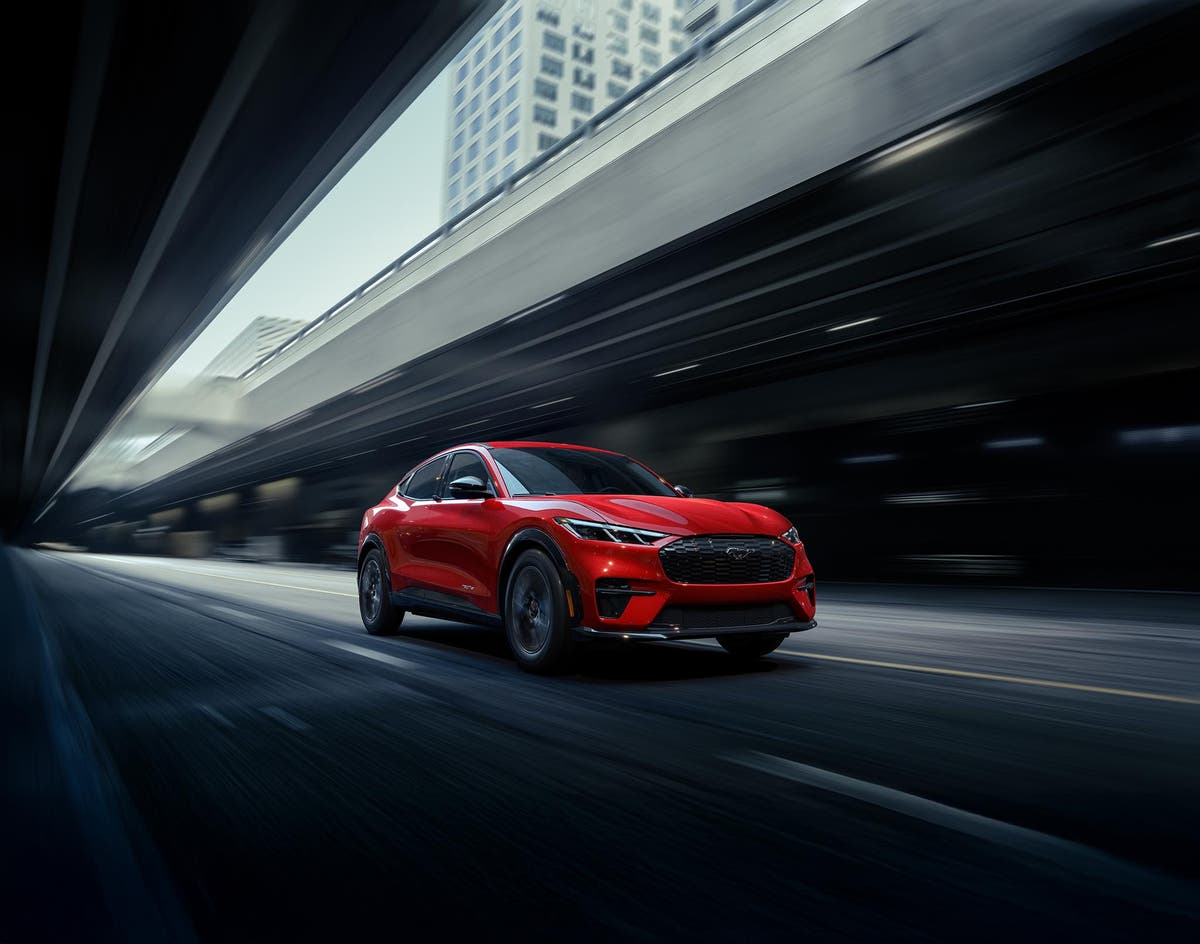
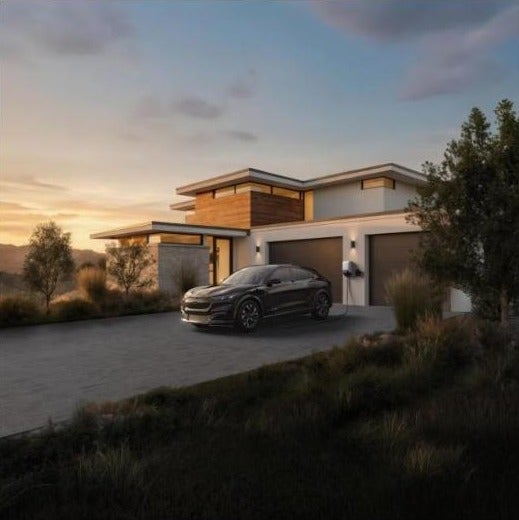
2026 Ford Mustang Mach-E

Start With Where You Park at Night

Whether you park in a garage in Norton, a driveway in Barberton or a spot near Akron, walk out and look for the nearest outlet. A standard outlet nearby lets you plug in on day one, and that's a fine way to begin. Adding a 240V outlet or a wired-in charger gets you a full battery most mornings, which is the setup we suggest planning around.

Level 1 Charging From a Standard Outlet

Level 1 uses any standard 120V wall outlet and the Ford Mobile Power Cord. It works well for overnight top-ups, especially if you cover fewer than 20 miles on a typical day. It's the easy starting point while you decide on something faster. If you're still comparing models, our Ford model research page is a good companion.

Level 2 Charging at Home

Level 2 runs on 240V and cuts charging time sharply, and you've got two paths to choose from. If you're shopping for your first EV, our electric Ford inventory is the place to see a charge port in person.

  • Plug-in: a NEMA 14-50 outlet, the same type an electric stove uses, paired with the Ford Mobile Power Cord.
  • Wired-in: a Ford Connected Charge Station or Ford Charge Station Pro, both installed by a professional.

On a 240V circuit with a 48-amp wired-in station, a full charge on the 2026 Mach-E runs from about 7.7 hours with a standard-range battery to 9.9 hours with a GT or Rally. The plug-in cord on a NEMA 14-50 outlet charges more slowly, so a wired-in station suits drivers who want the shortest overnight window.

A licensed electrician can look at your electrical panel, add the outlet or hardwire the station, and handle permits. Installation cost depends on local electrician rates, permit requirements, your home's electrical capacity, where the charger goes, and whether your garage is attached or detached.

DC Fast Charging on the Road

DC fast charging needs more power than most homes can supply, so you'll find it at public stations. A stop takes under an hour, which makes it the quickest way to add charge on a longer trip out of Summit County.

The Ford app lets you check your charge and plan charging stops, and with Connected Navigation you can precondition the battery on the way to the charger.

Winter Charging Habits

Winters around Barberton, Norton and Akron ask a little more of an EV, but you'll find the habits are simple. Heating and cooling the cabin uses energy, and outside temperature changes how long a charge takes.

Plug in when you get home, keep the car connected until you leave, and use the Ford app to precondition before you go so the car uses its energy well. A smooth driving style with gentle acceleration and coasting also helps your range.

Mach-E Charging Questions

Can I charge a Mustang Mach-E from a regular wall outlet?

You can charge from a standard 120V outlet with the Ford Mobile Power Cord, which is Level 1 charging and suits overnight top-ups and drivers who cover fewer than 20 miles a day. If your daily miles are higher, a 240V outlet or wired-in charger fills the battery much sooner.

What is the difference between Level 1, Level 2 and DC fast charging?

Level 1 uses a standard 120V outlet and suits top-ups. Level 2 uses 240V at home, either from an outlet or a wired-in station, and fills the battery overnight. DC fast charging happens at public stations, takes under an hour per stop, and works best for longer trips.

Do I need an electrician to install a home charger?

A Ford Connected Charge Station or Charge Station Pro is installed by a professional. The 240V plug-in option may also call for a licensed electrician, who can assess your panel, add the outlet and handle permits. A standard 120V outlet works right away with the Ford Mobile Power Cord.

How do I find public charging stations?

Start with the Ford app, which shows your charge and helps you plan charging stops. Connected Navigation can precondition the battery on the way, and a DC fast charging stop can take under an hour.

Does cold weather change how I should charge?

A little planning helps, since cabin heating affects range and temperature changes how long a charge takes. Precondition the car through the Ford app before you drive, keep it plugged in until you leave, and expect winter trips to use more energy than summer ones.

See a Mach-E in Person

Seeing the charge port, the cord and the screen makes the plan feel real, and we're glad to show you. Schedule a test drive and bring your charging questions, or use our payment calculator to plan your budget. We'll go through each one with you.
Posted in:

Related Posts

Ford Hybrid vs. Gas

Ford Hybrid vs. Gas: Which Is Right for You?

Imagine two Ford Mavericks parked side by side. They share the same bed, the same seats for five and the same footprint, and one carries the 2.5L Hybrid while the other carries the 2.0L EcoBoost. That pair is the hybrid-versus-gas question in its simplest form. Choose the hybrid if most of your miles are commuting and errands, because the 2026 Maverick Hybrid is EPA-estimated at 38 mpg combined with front-wheel drive. Choose gas when you want more power, since the EcoBoost engine makes 250 hp and 280 lb-ft. Both tow 2,000 pounds, or 4,000 with the 4K Tow Package. Same Truck, Two Engines 2026 Maverick 2.5L Hybrid 2.0L EcoBoost Power 184 hp combined 250 hp, 280 lb-ft EPA-estimated mpg, front-wheel drive (city/highway/combined) 42/35/38 23/32/26 EPA-estimated mpg, all-wheel drive (city/highway/combined) 40/34/37 22/30/25 Towing 2,000 lbs, 4,000 with 4K Tow Package 2,000 lbs, 4,000 with 4K Tow Package Fuel tank 13.8 gallons 16.5 gallons Every figure here is EPA-estimated, and your own mileage depends on how you drive. Where the Hybrid Earns Its Keep Look at the city row in the table. The hybrid's 42 mpg city is well above the EcoBoost's 23, and stop-and-go driving is where the electric motor does the most work, so if your week is school drop-offs, errands in Barberton and a commute toward Akron, the hybrid fits. All-wheel drive is available on the hybrid too, so you can have both efficiency and winter confidence. Where the Gas Engine Fits The EcoBoost brings the stronger punch, with 250 hp and 280 lb-ft. It's standard on the Lobo and Tremor and available on the XL, XLT and Lariat. It also carries a bigger 16.5-gallon tank, which suits long highway stretches. Towing and Hauling On the Maverick, the engine choice leaves towing unchanged, at 2,000 pounds standard and 4,000 with the 4K Tow Package. If you need to pull more, the 2026 F-150 offers a PowerBoost full hybrid that is rated for heavier trailers when properly configured. Pro Power Onboard on PowerBoost models can run your tools and gear. Match the Engine to Your Week Here's the plain version we'd give you at the dealership. Mostly in town: the hybrid. Mostly highway or you want the most power: the EcoBoost. Trailers and job sites: look at the F-150 PowerBoost. If your week is a mix, drive both back to back, and browse our vehicle comparisons for more side-by-side ideas. The difference shows up in the first mile, and our Ford model research page fills in the rest. Hybrid vs. Gas Questions Is a hybrid or gas Maverick better for city driving? The hybrid is the better match, with an EPA-estimated 42 mpg city with front-wheel drive compared with 23 for the EcoBoost. Electric assist works hardest in stop-and-go traffic, which is why the city number shines, though actual mileage may vary with your driving habits. Does the hybrid Maverick come with all-wheel drive? Yes, the 2.5L Hybrid is available with all-wheel drive and is EPA-estimated at 37 mpg combined. That keeps most of the efficiency while giving you extra confidence on snowy Northeast Ohio roads, though actual mileage may vary with your driving habits and the weather. Can a hybrid tow as much as the gas version? On the Maverick it can, since the hybrid and the EcoBoost both tow 2,000 pounds standard and 4,000 pounds with the 4K Tow Package. For bigger loads, the F-150 PowerBoost full hybrid is rated for heavier trailers when properly configured. What does EPA-estimated mean on a hybrid rating? It means the figure comes from standardized EPA testing, which lets you compare vehicles on equal footing. Your own results depend on how you drive, the weather and the load you carry, so you'll find actual mileage may vary from the number on the sticker. Can I drive the hybrid and the gas version back to back? Yes, and we encourage it. Schedule a test drive and tell us you'd like to compare the Maverick Hybrid with the EcoBoost, because a few miles in each shows you the difference in power and feel better than any chart can. Drive Both Bring your daily route in mind and we'll help you pick. Browse new Ford inventory, estimate payments with the payment calculator, or schedule a test drive. We'll go at your pace.

How Long Does It Take to Charge a Ford Mustang Mach-E?

How Long Does It Take to Charge a Ford Mustang Mach-E?

Say you plug in at 9 p.m. after dinner and wonder whether the car will be ready for the morning commute. That's the question most Mach-E shoppers are really asking. On a Level 2 home charger, a standard-range 2026 Mustang Mach-E takes just under 8 hours to charge, and a GT or Rally takes just under 10. A public DC fast charging stop takes under an hour, and a standard household outlet suits overnight top-ups. The Short Answer by Battery Battery and Drivetrain Battery Size Full Charge on 240V, 48 Amps Standard-range, rear-wheel drive 73 kWh usable 7.8 hours Standard-range, eAWD 73 kWh usable 7.7 hours Extended-range GT and Rally 91 kWh 9.9 hours An Overnight Charge at Home Plug in at 9 p.m. and a standard-range Mach-E is full before 5 a.m., while a GT or Rally finishes by about 7 a.m. Think of your driveway as a gas station that opens every night, where the habit matters more than the number. If you're shopping for one, our electric Ford inventory is a good place to start. A Top-Up Between Errands A standard 120V outlet adds charge slowly and steadily, and it fits drivers with a short daily commute who leave the car parked overnight. It's a trickle that keeps pace with a short commute. A Stop at a Public Fast Charger DC fast charging gives the quickest boost and lives at public stations. A typical stop takes under an hour, and Connected Navigation can precondition the battery on the way so you arrive ready to charge. The Ford app shows your progress. What Changes the Clock The table uses a 48-amp charger, and a plug-in cord on a 240V outlet charges more slowly. Your own numbers will vary a little from the table, because the size of the battery, your starting charge, the outside temperature and the battery's charging curve all shift the time. Starting from a half-full battery shortens a charge, and a cold January night in Barberton or Norton can lengthen it. Our Ford model research page has more on each model. Charging Time Questions How long does a Mach-E take on a 240V home charger? On a 240V outlet with a 48-amp charger, a standard-range Mach-E takes about 7.7 to 7.8 hours, while the GT and Rally need a little longer. That's a full charge from empty, so plugging in at night means the car is ready by morning. How long is a typical DC fast charging stop? A DC fast charging stop takes under an hour. Fast chargers live at public stations, and you'll check your charge and plan the stop in the Ford app. Connected Navigation can precondition the battery on the way. Does a bigger battery take longer to charge? Usually, since a larger battery has more to fill. The GT and Rally batteries take 9.9 hours on the same home charger where a standard-range battery takes just under 8, so the overnight window matters a little more and an earlier plug-in helps. Why did my charge take longer than expected? Several things move the clock, including the temperature outside, how much charge you started with and how the battery's charging curve tapers near full. A cold night can add time, and preconditioning through the Ford app before you drive helps you get the most from the battery. Ready to See One? We'll walk you through the charge port, the cord and the app. Schedule a test drive, then use Get Directions to plan your trip. Bring your questions and we'll walk through them.

2026 Ford Bronco vs. Bronco Sport

2026 Ford Bronco vs. Bronco Sport: Two Adventure SUVs, Two Personalities

The names match, and the vehicles take you in different directions. The 2026 Ford Bronco is the purpose-built off-roader with a removable roof and doors, built for trails and open-air drives. The 2026 Ford Bronco Sport is the compact SUV that brings trail-ready style to daily life, from the school drop-off to a weekend at Cuyahoga Valley National Park. This guide explains the key differences so you can choose the Bronco that matches your life in Northeast Ohio. The Key Difference The Bronco is built on a body-on-frame platform and comes in two-door and four-door body styles with removable roof panels and doors. The Bronco Sport is a compact crossover SUV with a unibody structure, a roomy five-passenger cabin and a practical liftgate. Pick the Bronco when the adventure is the main event. Pick the Bronco Sport when everyday comfort and easy driving share the spotlight with weekend fun. Feature 2026 Bronco 2026 Bronco Sport Class Midsize off-road SUV Compact SUV Body style Two-door or four-door, removable roof and doors Four-door with a liftgate Drivetrain 4x4 available 4x4 standard Engine highlight Ask our team about engine choices by trim 2.0L EcoBoost on the Badlands Fuel economy Varies by engine and trim EPA estimated 25 city and 30 highway Trims Multiple trims, see our trim guides Big Bend, Heritage, Outer Banks, Badlands Size and Everyday Use Compact size is the Bronco Sport's superpower. It slides into parking spots at Summit Mall, navigates downtown Akron with ease and still has room for groceries, a pet and the family. The Bronco is larger and more rugged, with a taller stance and a design that celebrates its off-road mission. Many Bronco owners embrace the experience of lifting off the roof on a sunny day along Route 8 or a spring drive through the Metro Parks. Off-Road Capability Both SUVs carry Ford's G.O.A.T. Modes, which tailor traction and throttle response to different surfaces. The Bronco Sport comes with standard 4x4 and 5 G.O.A.T. Modes on the Big Bend, and the Badlands upgrades to an advanced 4x4 system with a twin-clutch rear drive unit, 7 G.O.A.T. Modes, a steel front bumper and underbody protection. The Bronco takes off-road ambition to the next level, with a design that suits rocky trails, deep mud and sand. Our team can connect you with the trim that matches your adventure goals. Bronco Sport Trims at a Glance Big Bend: standard 4x4, a 13.2-inch center display and the Ford Connectivity package Heritage: Oxford White paint with Bronco script side decals, all-terrain tires and plaid cloth seats Outer Banks: heated front seats and steering wheel, plus a black-painted grille and roof Badlands: 2.0L EcoBoost, an advanced 4x4 system and underbody protection Our trim comparison guides cover the full Bronco family. Which Bronco Fits Which Driver? Daily commuter with weekend plans: Bronco Sport Family that wants a compact SUV with 4x4 confidence: Bronco Sport Trail enthusiast who wants an open-air experience: Bronco Driver who plans serious off-road adventures: Bronco Winter in Summit County Lake-effect snow and icy mornings make 4x4 a smart feature in our region. The Bronco Sport includes it as standard, and the Bronco offers it, so either SUV is ready for January in Barberton. See Both SUVs in Barberton Browse our Bronco inventory and Bronco Sport inventory, or read about the 2026 Bronco Sport on its own page. If you are weighing bigger SUVs, our SUV size guide shows how the whole lineup stacks up. When you are ready, check new vehicle specials, estimate a payment with our payment calculator or schedule a test drive. FAQs What is the main difference between the Bronco and Bronco Sport? The Bronco is a body-on-frame off-roader with two-door and four-door styles and removable roof panels and doors. The Bronco Sport is a compact crossover SUV with a unibody structure, designed for everyday comfort with trail-ready style. Does the Bronco Sport come with four-wheel drive? Yes. Four-wheel drive is standard on the 2026 Bronco Sport, which is a favorite feature for drivers in Northeast Ohio winters. What gas mileage does the Bronco Sport get? Our Bronco Sport page lists EPA estimated fuel economy of 25 mpg city and 30 mpg highway. Your results will vary with trim, engine and driving habits. Which Bronco Sport trim is best for off-roading? The Badlands. It pairs a 2.0L EcoBoost engine with an advanced 4x4 system, 7 G.O.A.T. Modes and underbody protection, so it is the Bronco Sport built for trails. Can I take the roof and doors off a Bronco? Yes. The Bronco is designed with removable roof panels and doors for an open-air driving experience. Our team can show you how the system works during a test drive. Which one is easier to park around Akron? The Bronco Sport. Its compact footprint makes tight spaces, parking decks, and busy shopping lots easy to handle. Can I order a Bronco with my own choices? Yes. Our custom order page helps you start building a Bronco or Bronco Sport that fits your plans.